
Tactile Design: How Texture Is Changing Tile Trends in 2026
Run your hand across a soft honed tile. Feel the subtle friction, the velvety resistance. Now watch how the light moves across its surface as you shift position, catching differently, creating depth where a glossy tile would simply reflect.
That's the shift happening in 2026. We're moving beyond "how does it look?" to "how does it feel?"
The industry calls it sensory design, the idea that in an increasingly digital world, physical spaces should offer tactile richness. Flat, high-gloss surfaces that dominated the 2010s are giving way to materials that invite touch. Surfaces with dimension. Finishes that respond to light throughout the day.
For anyone planning a renovation, understanding texture is now as important as choosing colour. The right finish can completely transform how a space feels, not just how it photographs.
Why Touch Matters in 2026
The rejection of high-gloss surfaces isn't random. It reflects how we're engaging with our homes differently.
We spend hours each day on screens. Smooth, flat, identical glass. Our homes have become the counterbalance. Spaces where we want to feel grounded, connected to something physical. Textured materials deliver that. A soft honed floor tile feels substantial underfoot. A ribbed wall tile catches your eye differently each time you pass it.
There's a visual dimension too. Textured surfaces create depth because they interact with light dynamically. As the sun moves through a room, shadows shift across ridges and undulations. The space feels alive rather than static. In bathrooms especially, where we often have limited natural light, texture adds visual interest that flat surfaces simply can't provide.
Even acoustics play a role. Textured walls absorb sound slightly better than smooth ones. A bathroom clad in soft honed tiles feels quieter, more spa-like, than one lined with high-gloss ceramic. It's subtle, but it contributes to that sense of sanctuary.
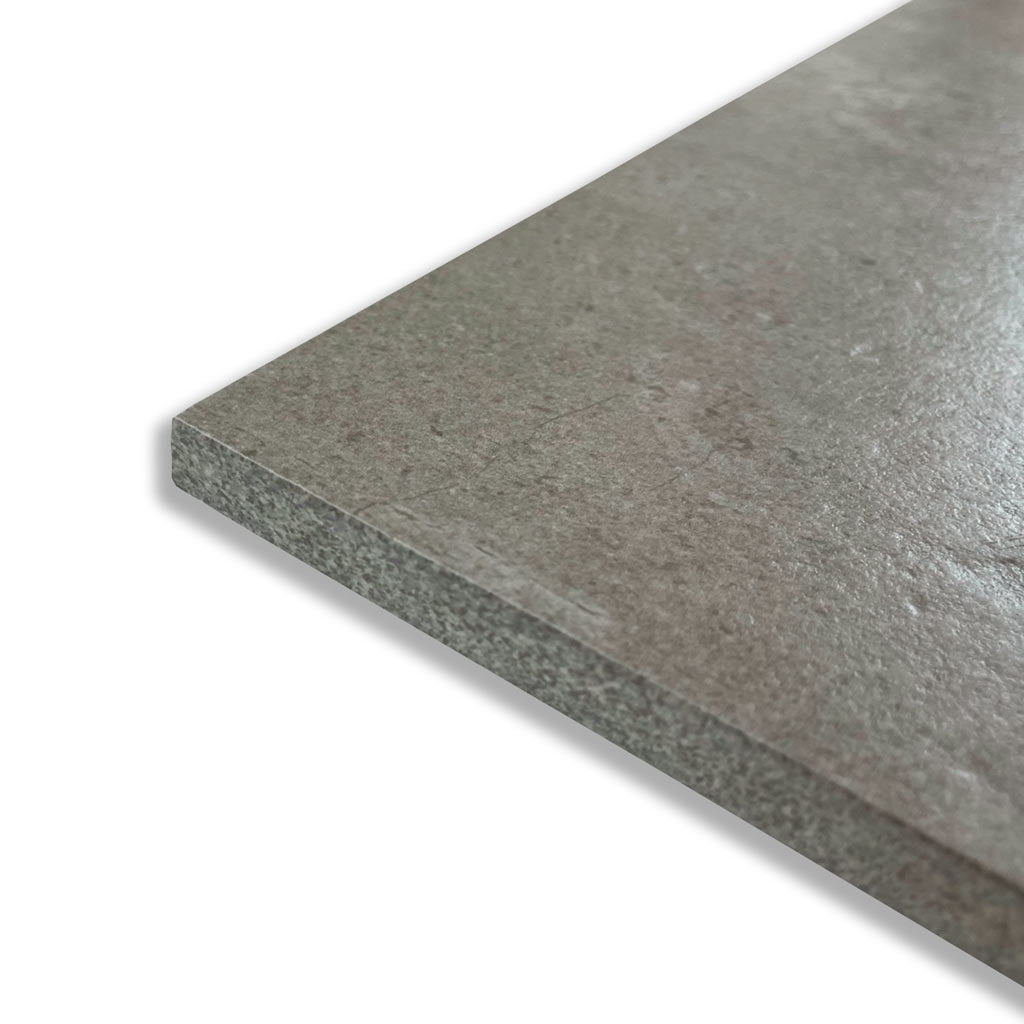
The Milan Soft Honed range exemplifies this direction. The finish sits between matte and polished, velvety to touch, with a subtle sheen that mimics natural stone. It's the kind of surface you want to run your hand across.

Gloss, Matte, Soft Honed: What's the Difference?
Not all finishes serve the same purpose. Understanding the options helps you choose what's right for each space.
Gloss tiles are highly reflective. They bounce light around a room, making spaces feel brighter and larger. They're easy to wipe clean and work well in small or dark areas where you need all the light you can get. The trade-off is that they show water spots, fingerprints, and scratches more readily. They can also feel slippery when wet. TileCiti's Gloss Tiles collection offers options across colours and formats for spaces where this finish makes sense.
Matte tiles sit at the opposite end. Non-reflective and contemporary, they hide imperfections and feel less slippery underfoot when wet. Matte finishes read as more sophisticated to many eyes. Less "shiny," more architectural. They're forgiving of dust and water marks. The Matt Tiles collection covers a wide range of colours and applications.
Soft Honed is the 2026 hero finish. It occupies the middle ground, a subtle sheen without the mirror-like reflection of gloss. The surface has a velvety quality that mimics honed natural stone. It catches light beautifully while remaining practical and easy to maintain. This is the finish dominating design magazines and luxury projects right now. The Soft Honed Tiles collection at TileCiti features this across key ranges.
Lappato (semi-polished) offers another option, a matte base with polished highlights that create visual movement. Lappato Tiles work well where you want some shine without full gloss.
Textured finishes add grip and dimension. Essential for outdoor areas and wet zones where slip resistance matters, but increasingly chosen for interior walls where the three-dimensional surface creates visual interest. The Textured Tiles collection includes options for both practical and aesthetic applications.
Ribbed, Fluted, Finger Tiles: The Architectural Texture Trend
If soft honed is the finish of the moment, Kit Kat tiles are the format.
Also called finger tiles, these thin vertical rectangles have become the defining architectural mosaic of the mid-2020s. They create a ribbed or fluted effect on walls, with vertical lines that add rhythm, shadow, and dimension. The look echoes trends in joinery and furniture, where fluted panels and ribbed surfaces have become ubiquitous.
The appeal is partly visual. Vertical lines make ceilings feel higher. The ridges catch light differently throughout the day, creating subtle shifts that keep a space interesting. But there's also something tactile about them. The surface invites touch in a way that flat tiles don't.
Applications have expanded well beyond bathroom walls. Kit Kat tiles now appear on kitchen island fronts, where they protect cabinetry from scuffs while adding textural interest. They wrap around curved shower walls beautifully. The individual tiles flex to accommodate gentle curves in a way that large format tiles can't. Behind freestanding baths, they create focal points that draw the eye.
The evolution in 2026 is colour. While white remains a staple, the trend is moving toward vintage glazes, earthy tones, and matte finishes. Kit Kat White Matt delivers the classic look with a contemporary non-reflective finish. Kit Kat White Gloss bounces light for brighter spaces. Kit Kat Black creates drama in powder rooms and feature walls. And Fingers Vintage White introduces that handmade character with an irregular glaze that feels crafted rather than manufactured.
The full Kit Kat collection at TileCiti covers the range, with different colours, finishes, and formats to suit various applications.

Perfectly Imperfect: Why We're Embracing Irregular Tiles
The obsession with machine-made perfection is fading. In its place, surfaces that feel handcrafted and human.
The influence comes largely from Zellige, traditional Moroccan tiles with undulating surfaces, irregular edges, and high tonal variation. These tiles shimmer like water when light hits them, each one slightly different from the next. They feel alive in a way that perfectly uniform tiles don't.
Genuine handmade tiles come with practical challenges. They're expensive, difficult to source, and labour-intensive to install. The irregularity that makes them beautiful also makes them tricky to lay. For many Australian projects, the labour costs alone put them out of reach.
The solution is porcelain that captures the aesthetic. Modern manufacturing can reproduce the visual variation (V3/V4 ratings mean significant tonal difference between tiles) and surface irregularity of handmade tiles while maintaining the consistency that makes installation practical.
The Picasso Series captures this with decorative patterns reminiscent of traditional encaustic tiles, character and history in a format that installs cleanly. The Capri Vintage White offers an irregular glaze effect that catches light unevenly, creating depth and movement on walls. The Frames Mosaic features a crackled glaze that adds subtle texture and vintage character.
For those wanting to explore this direction further, the Encaustic Look collection offers a range of patterned options with that handcrafted feel.

Where to Use Textured Tiles
Texture works differently in different spaces. Here's how to apply it effectively.
Bathroom feature walls are the natural home for textured tiles. Behind the vanity, in the shower niche, or as an accent wall behind a freestanding bath. These are spaces where texture adds visual interest without overwhelming. Soft honed finishes or Kit Kat tiles work beautifully here.
Kitchen splashbacks benefit from texture that breaks up the uniformity of cabinetry. Textured subway tiles or irregular glazes add warmth and prevent kitchens from feeling clinical. The Splashback Tiles collection includes options specifically suited to this application.
Living area floors increasingly feature soft honed large format tiles. The texture feels grounded underfoot, substantial in a way that high-gloss tiles don't. The Living Area Floor Tiles collection includes soft honed options in larger formats.
Curved surfaces showcase Kit Kat tiles at their best. The individual tiles flex around gentle curves, creating seamless wrapped surfaces that larger format tiles can't achieve. Curved shower walls, rounded island benches, arched niches. These are opportunities for textured mosaics to shine.
A note on pairing: textured tiles in warm tones amplify the cosy effect. The combination of tactile surface and earthy colour creates spaces that feel both sophisticated and welcoming.

Feel the Difference
Texture transforms a space from "nice" to "memorable." It's the difference between a bathroom you use and a bathroom you enjoy being in. Between a kitchen that functions and one that feels considered.
The soft honed finish is leading this shift. Tactile, light-catching, sophisticated without being precious. Kit Kat and finger tiles add architectural depth that flat surfaces can't match. And the handmade imperfection trend reminds us that character often comes from irregularity, not uniformity.
The challenge is that texture is something you need to experience. Photos don't capture how a soft honed tile feels under your hand, or how light moves across a ribbed surface throughout the day. Visit the TileCiti showroom to feel the difference. Run your hand across the Milan Soft Honed. See how the Kit Kat tiles catch the light. The design team can help you understand which textures suit your space and how to combine them effectively.
Because in 2026, how a space feels matters as much as how it looks.
Related reading: Pair textured finishes with the warm colour palette trending in 2026. For the ultimate tactile experience, explore soft honed travertine-look tiles.